REVIEW · DOMINICAN REPUBLIC
Three Eyes National Park Exploration Tour
Book on Viator →Operated by Rincones de Mi Pais · Bookable on Viator
Three watery stops under Santo Domingo’s hills. This Three Eyes Caves National Park visit mixes caves, a micro rainforest, and several lakes in about two hours, with a guide who helps you make sense of what you’re seeing.
I especially love the way the tour hits the best-hour moments at the lakes, including the sulfur water areas, and then keeps things moving with a relaxed pace. You also get the fun raft ride to the fourth lake, which is the kind of detail that feels hard to recreate on your own.
The main thing to consider is physical comfort: the route includes lots of steps and cave walking, so wear good sneakers and plan to take your time.
In This Review
- Key Things That Make This Tour Work
- Why the Three Eyes Caves Tour Feels Like Santo Domingo’s Best Side Trip
- Meeting Point and Mobile Ticket: How to Start Without Stress
- Inside the Caves: Sulfur Lake, Refrigerator Lake, Lady’s Lake, and the Micro Rainforest
- The Man-Pulled Raft Ride to Zamaragullon Lake
- Cultural Stories: Aboriginal History You’ll Actually Remember
- What You’ll Do for About Two Hours (And Why That Timing Works)
- Price and Value: Is $35 a Fair Deal?
- What to Bring: Snacks, Sneakers, and a Realistic Step Count
- Guide Impact: Why Names Like Rosa, Luis, and Juan Carlos Matter
- A Final Practical Take: Should You Book This Tour?
- FAQ
- How long is the Three Eyes National Park Exploration Tour?
- Where does the tour meet?
- What is included in the price?
- Is admission to the park included?
- What should I bring since snacks and lunch are not included?
- What group size should I expect?
- Is there a mobile ticket?
- Is the tour suitable for most people?
- What’s the cancellation policy?
- What happens if the weather is bad?
Key Things That Make This Tour Work
- Small group (max 12): more time for questions and fewer long waits.
- Guided cave route: you get help reading the experience, since signs alone don’t do much.
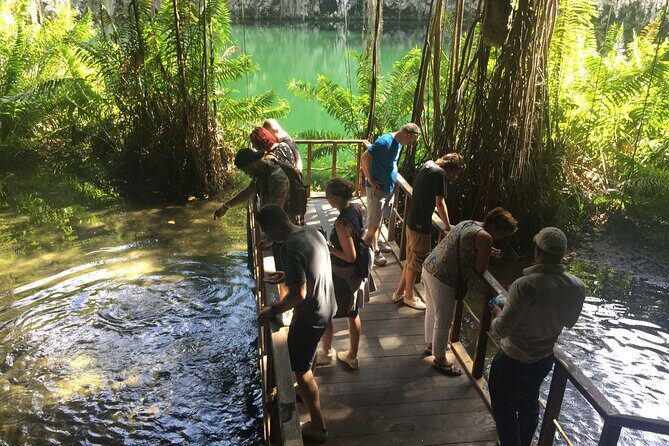
- Multiple lakes in one outing: sulfur, Refrigerator Lake, Lady’s Lake, and the raft-accessed Zamaragullon.
- Man-pulled raft experience: it adds a real sense of change of scenery.
- Cultural context: you’ll hear about the aboriginal history tied to the caves.
- Morning slot can feel calmer: the 9am start is often a better bet for crowds.
Why the Three Eyes Caves Tour Feels Like Santo Domingo’s Best Side Trip
Santo Domingo can be all city—until you hit the edge of a hidden cave system where the air turns cooler and the water becomes the star. The Three Eyes park is right in the Santo Domingo Este area, so you’re not spending half a day on transport to reach something special.
This tour is built for people who want the highlights without feeling rushed. In practice, that means you get a structured route through caves and lakes, plus a guide to connect the dots: why certain areas smell of sulfur, why the water looks the way it does, and what the aboriginal people had to do with the space. It’s the kind of outing where you walk away with more than photos—you actually understand what you saw.
And because the group stays small, you’re not stuck trying to squeeze around other people every time you stop at the water. You’ll still move along a cave route, but the pace stays human.
You can also read our reviews of more tours and experiences in Dominican Republic.



Meeting Point and Mobile Ticket: How to Start Without Stress
You meet at Three Eyes National Park (F5J4+CR8, C. Marginal Las Americas Este, Santo Domingo Este 11604). The good news is the tour is designed so you can find the guide—many visitors note it’s easy to meet at the departure point.
You’ll also use a mobile ticket, which helps keep things simple once you’re there. The park itself is noted as near public transportation, so if you’re navigating locally, you’re not completely stranded.
One practical tip: don’t treat the meeting time like a suggestion. The walk inside the park depends on you being in the right place when the group forms. If you’re arriving from farther away or your Spanish is limited, give yourself buffer time so you can get settled before the tour starts.
Inside the Caves: Sulfur Lake, Refrigerator Lake, Lady’s Lake, and the Micro Rainforest
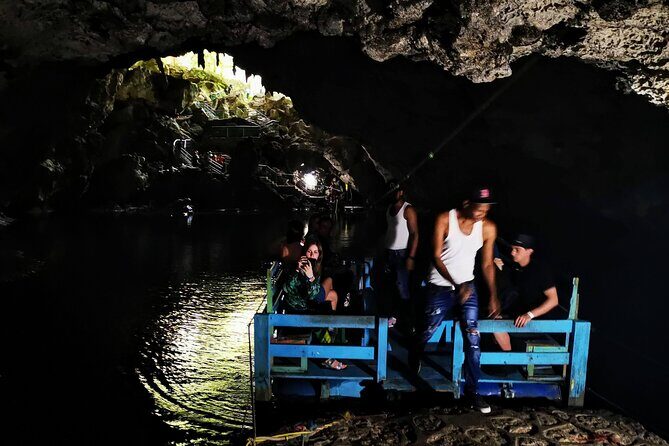
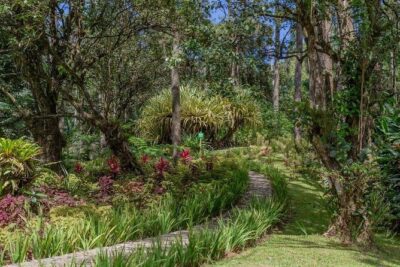
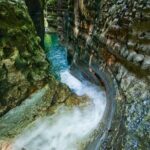
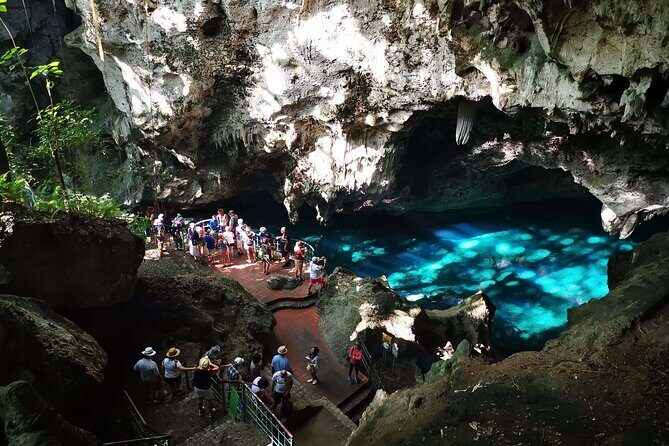
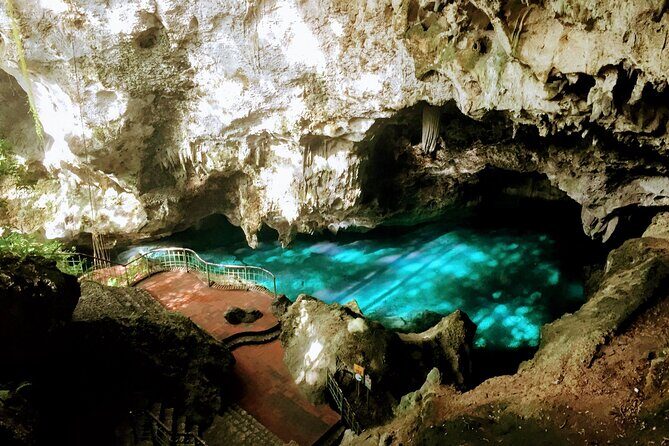
The heart of this experience is the cave system: dark rock passages that open into pockets of life. This is where the “micro rainforest” feel comes from. Even if you’re not a nature person, you’ll notice the humidity and the way the cave changes from one chamber to the next.
You’ll spend time around several famous lakes:
- Sulfur Lake: This is often the dramatic one, with a smell and color that make it instantly memorable.
- Refrigerator Lake: The name hints at cooler water, and the stop is built to let you see the contrast.
- Lady’s Lake: Another signature water area, where you can take photos and learn what makes it special.
What I like about the way this tour is paced is that it gives you time to actually look. Some cave places become a quick shuffle of photo stops. Here, the route is described as slow pace, no rush, which matters because water colors can shift with light and time of day.
You’re also likely to hear explanations the park signs don’t cover well. Several guide notes point out that the guided format helps you understand what you’re looking at, especially since not everything is obvious from the viewpoint alone.
The Man-Pulled Raft Ride to Zamaragullon Lake
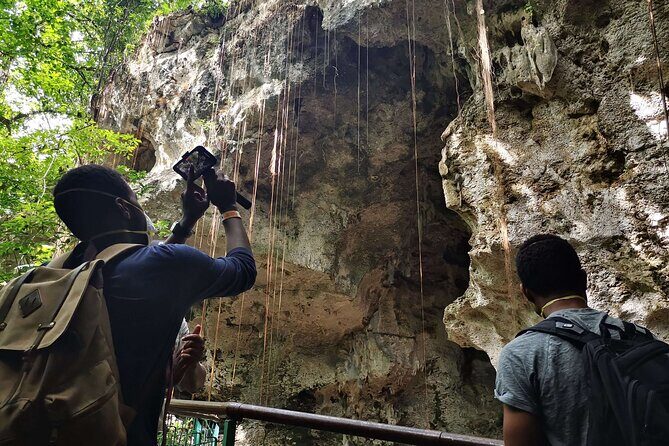
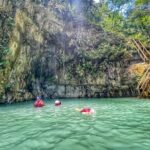
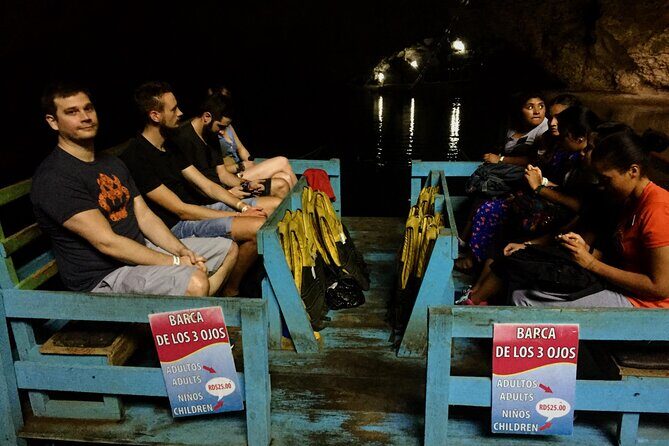
One of the most “only-here” parts is the raft ride. The tour includes a man-pulled raft experience that takes you to the hidden fourth lake, also called Zamaragullon Lake.
This is the moment that usually turns a good tour into a great memory. You’re moving differently now—less walking, more gliding through a cave waterway. It’s also when your camera gets real use, because you get a new angle on the cave’s watery world.
If you’re the type who likes small surprises, the raft section is your payoff. If you’re the type who prefers to stay on land, know this part is a built-in feature, so plan for it as part of the day’s flow—not an optional detour.
Cultural Stories: Aboriginal History You’ll Actually Remember
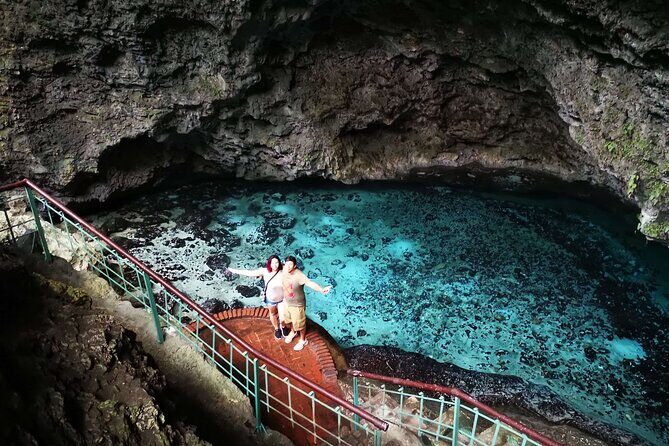
The caves aren’t just scenery. The experience includes history about the aboriginal people who once used the caves. That matters because it changes the tone from sightseeing to understanding—this was a lived space before it became a visitor attraction.
The best part is that the guide ties the story to what you’re seeing, so you don’t feel like you’re reading a lecture. Multiple guides are mentioned by name in visitor notes, including Juan Carlos, Luis, Victor, and Rosa. That’s a strong signal that interpretation is a key part of the product here, not an afterthought.
Language support also shows up in feedback. People highlight that guides can translate and answer questions in English and Spanish, which helps a lot if your Spanish is limited. You’re more likely to leave feeling you understood the story, not just watched it happen.




What You’ll Do for About Two Hours (And Why That Timing Works)
The full visit is about 2 hours. That’s a sweet spot in a city where afternoons can drag. You do the park experience, learn enough to feel satisfied, and then you’re done.
Then you get the rest of your day free. In practical terms, that means you can pair this with other Santo Domingo plans without building your schedule around a full-day excursion.
Also, the tour is capped at 12 travelers, which helps keep the group moving at a pace that doesn’t feel like a production line. You get stops long enough to take pictures and ask questions, and you’re not constantly waiting for the slowest person in line.
Price and Value: Is $35 a Fair Deal?
At $35 per person, this is priced like a straightforward, affordable guided outing—especially when you look at what’s included. The tour lists all fees and taxes and bottled water in the price, and the park admission is indicated as free in the tour details.
That combination is where the value comes from. You’re not paying extra at the gate for the core access, and you’re not doing a “cheap ticket” where the guide work feels thin. Visitors specifically praise how useful guides are for understanding what signs don’t make clear.
Of course, value only works if the experience matches expectations. Two low-star complaints mention issues like guide behavior and, in one case, a guide no-show. These are not typical highlights, but they are reminders to confirm your meeting details and keep your contact info accessible on arrival.
Overall, for what you get—caves, several lake stops, raft access, and guided explanations—$35 feels like solid value rather than a bargain that cuts corners.
What to Bring: Snacks, Sneakers, and a Realistic Step Count
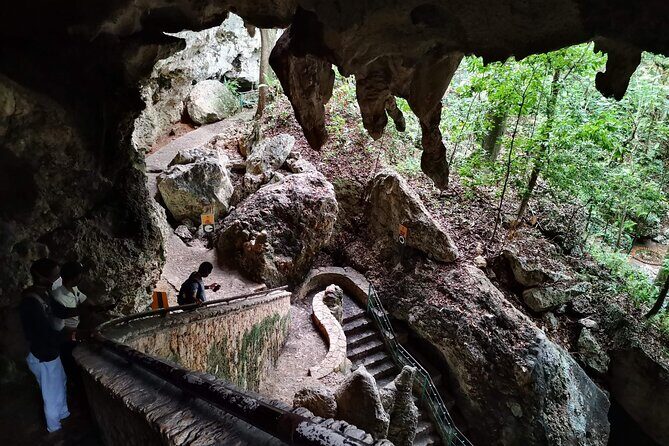
This is a walking-and-steps experience. Even if you’re in decent shape, cave routes can feel steeper than they look from the entrance. Visitor notes specifically recommend wearing sneakers and being ready to walk a lot of steps.
What’s not included is snacks and lunch, so plan accordingly. Bottled water is included, but water alone won’t fix energy dips if you skip breakfast or arrive late in the day.
If you’re planning around photos, consider timing too. One strong piece of advice: pick the 9am slot if you can. People say the park is less busy then, which means you spend more time looking at the lakes and less time waiting for clear angles.
And if you’re sensitive to crowds, keep your expectations aligned: it’s a popular site, just not during the calmest morning window.
Guide Impact: Why Names Like Rosa, Luis, and Juan Carlos Matter
In a tour like this, the guide can make or break the experience. You’re underground, moving through multiple stops, and the story has context that the average walk-through wouldn’t explain.
Guides named in feedback—Rosa, Luis, Juan Carlos, and Victor—are praised for being informative, friendly, and good at answering questions. Several notes mention guides helping with translation, and others point out that having a guide prevents you from feeling lost when the park relies heavily on minimal signage.
There’s also a pattern in positive feedback: people like the pace and the way the guide keeps it fun while still explaining details. That’s why the tour fits well for couples, solo travelers, and small groups who want both nature and meaning.
A Final Practical Take: Should You Book This Tour?
I’d book it if you want a compact, high-impact cave and lake experience with a guide doing the explaining for you. The tour is a strong match if you’re short on time in Santo Domingo, because two hours is enough to get the main sights—then you still get your day back.
I’d think twice if steps are a dealbreaker for your body or if you’re the type who hates waiting. The route includes steep sections, and it’s best approached with sneakers, patience, and a steady pace. Also, if you’re traveling with limited Spanish, aim to arrive early and be ready to show your mobile ticket and connect with the guide quickly.
If you choose a morning start and come prepared for walking, this tour earns its reputation as a must-do side trip in the area.
FAQ
How long is the Three Eyes National Park Exploration Tour?
It runs for about 2 hours.
Where does the tour meet?
The meeting point is Three Eyes National Park at F5J4+CR8, C. Marginal Las Americas Este, Santo Domingo Este 11604, Dominican Republic. It ends back at the meeting point.
What is included in the price?
The tour includes all fees and taxes and bottled water.
Is admission to the park included?
The tour details state admission ticket free, and fees/taxes are included in the price.
What should I bring since snacks and lunch are not included?
Bring snacks and plan for lunch if you’ll be hungry. The tour also involves many steps, so wear sneakers.
What group size should I expect?
The tour has a maximum of 12 travelers.
Is there a mobile ticket?
Yes, the tour uses a mobile ticket.
Is the tour suitable for most people?
Most travelers can participate, but the experience includes walking and steep steps, so comfortable shoes matter.
What’s the cancellation policy?
You can cancel up to 24 hours in advance for a full refund. If you cancel less than 24 hours before, the amount isn’t refunded.
What happens if the weather is bad?
The experience requires good weather. If it’s canceled due to poor weather, you’ll be offered a different date or a full refund.