REVIEW · DOMINICAN REPUBLIC
Guided Tour in the Colonial Zone of Santo Domingo
Book on Viator →Operated by Excursion guiada en la zona colonial · Bookable on Viator
A few streets in Santo Domingo feel like a time machine. This guided loop packs the Colonial Zone’s big monuments into about 3 hours, with museum time and a guide certified by the Ministry of Tourism. You’ll walk through places tied to Spain, the Church, and Dominican identity, with stops spaced so you’re not rushing nonstop.
Two things I really like: first, you get several admission tickets included for key sites, so you’re not hunting for entrances every time you stop. Second, the route is built around “see it, then understand it” moments—especially the museum stops and the major religious landmarks. The one caution: the schedule includes a lot of entrances, and some stops are marked not included, plus opening hours can affect what you actually get inside.
If you want a smooth highlights tour with context—and you’re fine paying a few extras at optional sites—this can be a very good use of your time in Santo Domingo.
In This Review
- Key highlights at a glance
- Colonial Zone in about 3 hours: how this route works
- Royal Palaces at Museo de las Casas Reales: where the story starts
- Catedral Primada de las Américas: Gothic style you can actually spot
- Fortress Ozama and quick views: not every stop is an entry
- House of Tostado and the first street vibe: Las Damas + El Conde
- Parque Colón, San Francisco Monastery ruins, and Dominican Convent
- National Pantheon and Hospital San Nicolás: power, memory, and care
- Rum and Cane Museum: the most interactive stop
- Where extra entrance fees can pop up: Casa Duarte and Alcázar de Colón
- Guide quality that changes the day: asking for specifics
- Price and value: why $65 can be a bargain or feel expensive
- Who should book this Colonial Zone tour (and who should skip it)
- Should you book? My practical verdict
- FAQ
- How long is the Colonial Zone guided tour in Santo Domingo?
- Where does the tour start and where does it end?
- What is included in the ticket price?
- Are there any stops where admission is not included?
- Does the tour include the Rum and Cane Museum?
- Is the tour offered in multiple languages?
- What happens if the tour is canceled due to bad weather?
Key highlights at a glance
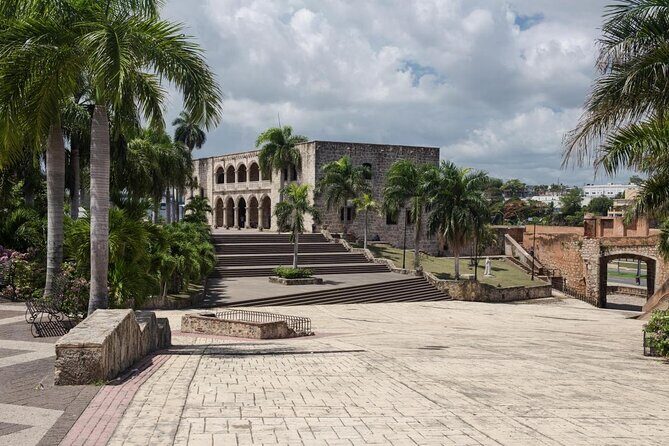
- Museum time with tickets included at major stops like Casas Reales, Rum and Cane, National Pantheon, and more
- Gothic Cathedral focus at the Catedral Primada de las Américas, with quick stops that still matter
- Walking the historic streets like Calle Las Damas and the pedestrian commercial stretch of Calle El Conde
- World Heritage ruins and oldest church sites with the San Francisco Monastery and the Dominican Convent area
- A fast, organized route through the heart of the Colonial Zone, capped at 50 people
Colonial Zone in about 3 hours: how this route works
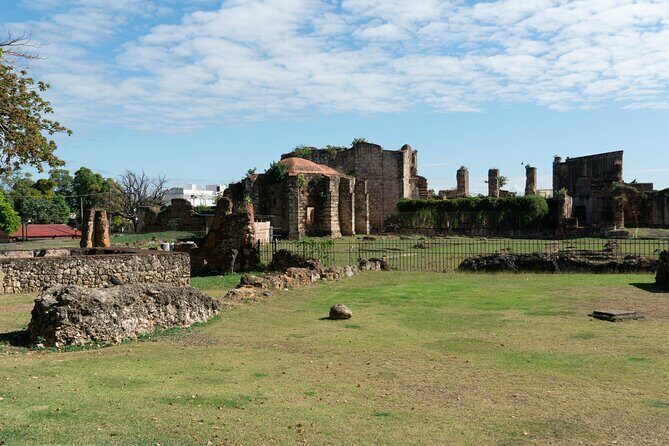
This tour is designed for people who want the Colonial Zone highlights without losing half a day. Expect a compact pace: most stops are short, then you move on, with enough time to look closely and get your bearings. It’s about 2 to 3 hours, and it ends where it starts, at the meeting point on C. Arzobispo Meriño.
The practical win here is continuity. You’re not bouncing around Santo Domingo hoping you’ll figure out the logic. Instead, you’re moving through a chain of meaningful sites: royal-era power (palaces and museums), Church authority (Gothic cathedral and convents), Spanish military history (Fortaleza Ozama), and Dominican national identity (Pantheon and Duarte area).
One more thing I appreciate: the group is limited to up to 50 people. That’s large enough to be lively, but small enough that a guide can still manage questions for at least part of the tour.
You can also read our reviews of more guided tours in Dominican Republic



Royal Palaces at Museo de las Casas Reales: where the story starts
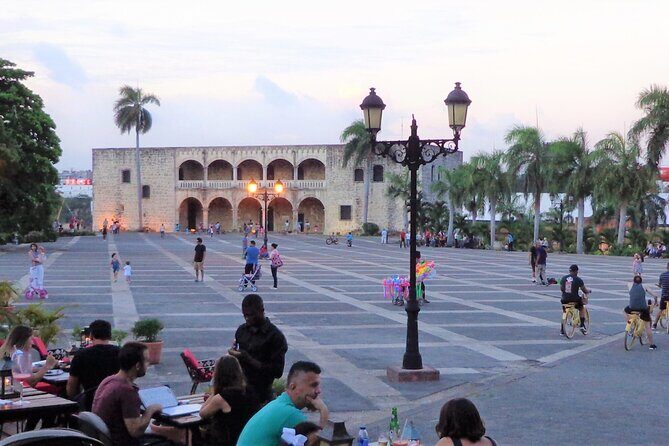
Your first big interior stop is the Museo de las Casas Reales, also known historically as the Royal Palaces. This is a 16th-century headquarters tied to the Spanish administration, with two palaces as part of the museum complex. The ticket is included, and the visit is given around 30 minutes, which is a good length for a museum introduction without turning it into a long slog.
This is where you learn how the Colonial Zone wasn’t just pretty buildings and old stones. It was a functioning center of power. You’ll have time to connect later stops—cathedrals, forts, convents, and political sites—to the same world of authority and governance.
If you care about interiors, this is one place where timing matters. On some trips, opening hours can change for individual museums, so if Casas Reales is a top priority for you, it’s smart to confirm it’s operating on your tour day before you count on being inside.
Catedral Primada de las Américas: Gothic style you can actually spot
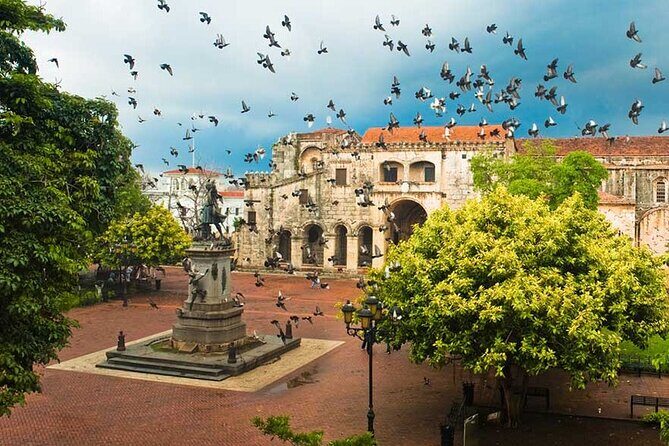
Next comes the spiritual and architectural anchor: the Catedral Primada de las Américas de Santo Domingo. You get about 15 minutes, and the admission ticket is included. Even in a short visit, the building’s style is meant to stand out—Gothic features like ribbed vaults and solid walls, plus the detail of three doors with Gothic contrast at two of them.
Here’s what I’d watch for if you only have a few minutes. Notice how the space feels built for ceremony and permanence. Gothic stone isn’t just decorative; it’s structural confidence. Then compare that to what you’ll see later in the ruins and convent areas, where religion and Spanish history overlap in different ways.
If your Spanish is basic or nonexistent, you’ll still get value from the guide. The structure is readable, and a good explanation helps you connect the cathedral to the broader “Colonial-era Catholic power” theme of the route.
Fortress Ozama and quick views: not every stop is an entry
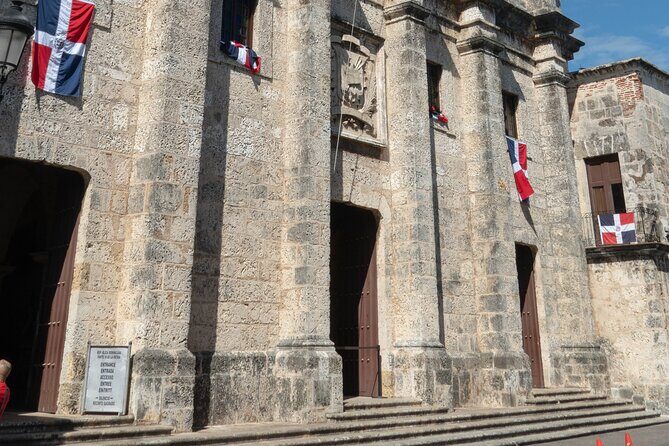
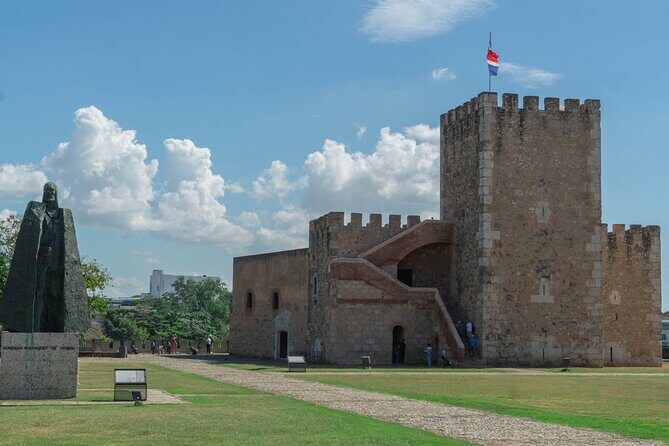
After the cathedral, the tour moves to Fortaleza Ozama. You’ll have about 5 minutes, but admission is not included for this stop. The time is short, so think of it like a key photo and context stop—built by the Spanish during the colonial era, it’s a reminder that Santo Domingo wasn’t just religious and administrative. It was also strategic and defensive.
This is a place to get the geography in your head. Fortaleza Ozama helps you understand why forts show up near important historic areas and how the city’s layout served safety and control.
Then you’ll hit a few streets and exterior points that stitch the tour together. That shift from interiors to outdoors is useful: it prevents museum fatigue and keeps the tour from feeling like a checklist of doors you never get to fully use.
House of Tostado and the first street vibe: Las Damas + El Conde
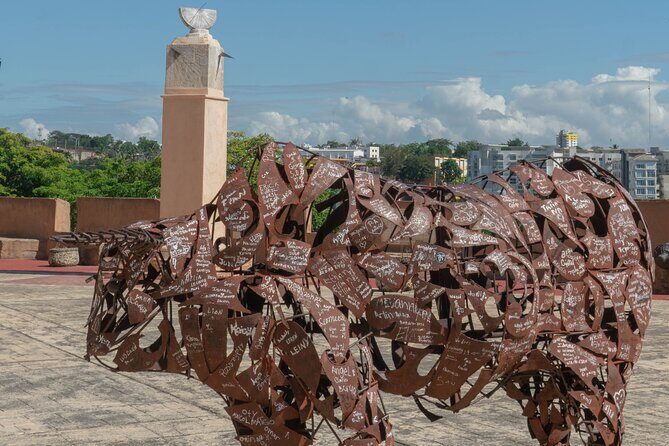
One of the more interesting name stops is Casa de Tostado. The tour schedule gives around 5 minutes, and admission is not included. It’s named for its first owner, Francisco Tostado de la Peña, a notary public of the governor. The facade detail you’ll want to clock is the twin window in Elizabethan Gothic style, noted as unique in America.
This is the kind of stop that’s brief but memorable because it teaches you to look at architecture like evidence, not just scenery. In a short time, you can spot the design cue and remember it later when you see other Gothic influences around the city.
Then you’ll walk to Calle Las Damas, which is described as the first street in Santo Domingo and in America. The street’s name links to a colonial-era detail: women reportedly walked there early in the colony’s days. It’s a short photo stop, but it’s one of those moments where a simple street name becomes a story.
After that, you move to Calle El Conde, the only pedestrian street in the capital and the commercial center of the Colonial Zone. It’s also described as about one kilometer long. You’ll spend around 10 minutes here, which is enough to feel the energy of the area while still getting a guided narrative about what it represented historically and what it is today.






Parque Colón, San Francisco Monastery ruins, and Dominican Convent
A good guided tour doesn’t just show you buildings; it shows you transitions—how the city shifts from royal administration to religious life to national identity. This part of the route does that in quick strokes.
First up is Parque Colón, a historic plaza that served as the main party center in colonial-era society. You’ll have about 5 minutes and no admission ticket required. Even if you don’t linger, it’s a useful contrast point. Not everything here was cathedral-level solemnity.
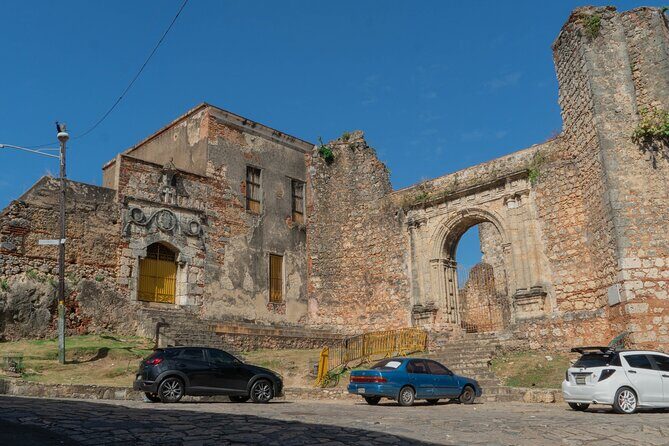
Next, you’ll visit the Monasterio de San Francisco, with around 5 minutes. Admission is free on this stop, and it’s described as one of the most important ruins in the Dominican Republic and declared a World Heritage Site. Ruins can be frustrating when you don’t have context. A guide helps you translate “broken walls” into “where daily religious life once happened.”
Then you’ll see the Dominican Church and Convent area for about 5 minutes, also free. The description is big: it’s said to be the oldest Catholic building in the American continent, the first in the New World and in Santo Domingo. Again, even a short stop can land if you know what to listen for—this is a “why this place matters” stop as much as a “look at the facade” stop.
National Pantheon and Hospital San Nicolás: power, memory, and care
The route then moves into two stops that feel different from the churches and ruins, even though the theme of “history with meaning” stays strong.
You’ll visit the National Pantheon for about 10 minutes, with admission included. This is presented as the Panteón Nacional or Panteón de la Patria—described as a mausoleum connected to Dominican national memory. In a short visit, you mainly want the storyline: who is honored here and why a mausoleum is one of a nation’s most political spaces.
After that, you’ll stop at Hospital Saint Nicholas of Bari for around 5 minutes. Admission is free. This is described as the first hospital in America, with construction beginning in 1503 in Santo Domingo, founded by Nicolás de Ovando. If you’ve ever wondered how colonial-era cities handled illness and care, this stop gives you a direct answer: there was real infrastructure for it, and it started early.
Even with just a few minutes, these stops help you see Santo Domingo as more than architecture. It’s also institutions—health, governance, memorials.
Rum and Cane Museum: the most interactive stop
One of the best structured stops for most people is Museo del Ron y la Cana (Rum and Cane Museum). You’ll have about 20 minutes, and admission is included. The description calls it interactive, focused on the history of Dominican rum.
This is where the tour gets lighter without getting shallow. Rum history connects to farming, production, trade, and the everyday culture that grows out of colonial-era economics. It also breaks the pattern of cathedral-and-palace fatigue, which matters on a tour with many brief outdoor stops.
If you want one moment where you can relax your brain and still come away with real facts, this is it.
Where extra entrance fees can pop up: Casa Duarte and Alcázar de Colón
Not every stop on the route is guaranteed to be covered by the included tickets. Some sites are clearly marked as not included in the schedule details.
Two of the main ones to watch are:
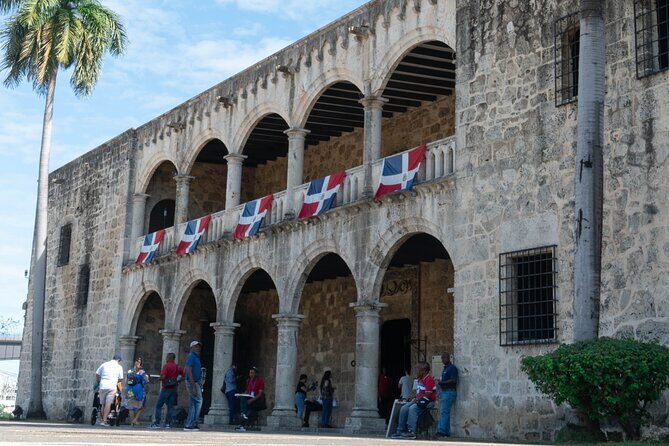
- Alcázar de Colón (Viceroyalty Palace of Don Diego Colón), about 20 minutes, admission not included
- Museo Casa Duarte (home of Juan Pablo Duarte, born in 1813), about 20 minutes, admission not included
That might surprise you because the tour overview says tickets are included for major museums and specifically lists Casa Duarte. But the detailed stop list flags admission as not included for Casa Duarte and also not included for Alcázar de Colón.
So here’s the practical advice: if Casa Duarte and Alcázar de Colón are must-sees for you, confirm what’s actually included for your exact departure date. Bring a little flexibility (and a backup payment method), so you don’t end up standing outside a ticketed moment you expected to enter.
This is also where groups with mixed expectations can get tense. If you love museums, you’ll want the doors to open on schedule. If you’re more about street-level history, the exterior views and guided explanations may be enough.
Guide quality that changes the day: asking for specifics
This tour is led by expert staff certified by the Ministry of Tourism, and you can get guides in several languages. That matters because a Colonial Zone tour lives or dies on explanations. Buildings are old everywhere, but good guiding makes the connections clear.
One guide name shows up in the experience context: Angel. When a guide like Angel is on point, the tour works the way it’s supposed to: patient pacing, clear answers, and enough local understanding that your questions don’t feel annoying.
If you’re the type who likes specifics, ask during the early stops. For example, after Casas Reales, ask how Spain’s administrative setup relates to what you’ll see at the cathedral and fort. Later, ask how rum history connects to the city’s larger colonial economy. This turns a “highlights walk” into a story you can remember after you leave.
And since you’re moving in a group, speak up early if you have mobility constraints or want more time at a stop. The tour lasts only around 3 hours, so your best chance to adjust is soon after it begins.
Price and value: why $65 can be a bargain or feel expensive
The listed price is $65 per person, and the tour notes group discounts. In value terms, that’s a solid deal if the included admissions match what you care about—especially since multiple entries are included, like Museo de las Casas Reales, Catedral Primada, National Pantheon, and Museo del Ron y la Cana.
However, the experience can feel overpriced if you end up paying out of pocket for multiple major sites and you lose an included interior due to the day’s situation. There’s also a lesson here from real-world expectations: when one major site doesn’t happen as planned, it’s not the tour length that disappoints—it’s the “I paid for access and context” feeling.
So use a simple checklist before you book:
- Confirm what’s included vs not included for your departure
- Decide which interior museums are non-negotiable for you
- Know you’ll also be seeing several exterior street and plaza stops that are free to enter
If you’re comfortable treating some sites as optional add-ons, $65 looks like very workable value. If you want maximum museum doors opened with zero extra fees, double-check inclusion details before you pay.
Who should book this Colonial Zone tour (and who should skip it)
This tour fits best if you want:
- A fast, guided highlights version of the Colonial Zone
- Clear context for major monuments without having to plan a route yourself
- At least a couple of included museum experiences, especially the Rum and Cane Museum
It may be less ideal if:
- You’re the type who hates mixed ticket coverage and wants everything included
- You’re hoping for long museum time at just one or two sites
- Your top goal is a specific interior museum that may require extra admission
If you’re traveling with kids, this can still work because the pacing is short-stop and you’ll get a more hands-on break at the rum museum. The key is choosing what you want most: story, architecture, or entrances.
Should you book? My practical verdict
I’d book this guided Colonial Zone tour if you’re trying to make the most of limited time. The route makes sense, and the included admissions hit the big anchors: Casas Reales, the cathedral area, the Pantheon, and the Rum and Cane Museum.
I wouldn’t book it with blind confidence if Casa Duarte and Alcázar de Colón are your two top targets, because the included-vs-not-included details conflict between the overview and the stop list. A quick confirmation before you go can save you money and frustration.
If you like a guided story through real monuments—and you’re fine with a couple of extra stops where you might need to buy entry separately—this is a strong way to see Santo Domingo’s Colonial Zone without getting lost.
FAQ
How long is the Colonial Zone guided tour in Santo Domingo?
It runs for about 3 hours (approximately), covering the main stops within the Colonial Zone.
Where does the tour start and where does it end?
The tour starts at C. Arzobispo Meriño 206, Santo Domingo 10210, Dominican Republic, and it ends back at the meeting point.
What is included in the ticket price?
Museum tickets are included. Specific stops in the schedule also list admission tickets as included, such as Museo de las Casas Reales, Catedral Primada de las Américas, National Pantheon, and Museo del Ron y la Cana.
Are there any stops where admission is not included?
Yes. The schedule lists admission as not included for several stops, including Fortaleza Ozama, House of Tostado, Alcázar de Colón, and Museo Casa Duarte.
Does the tour include the Rum and Cane Museum?
Yes. The Museo del Ron y la Cana is listed with admission included and a time of about 20 minutes.
Is the tour offered in multiple languages?
Yes. The guides are available in several languages so different visitors can follow along.
What happens if the tour is canceled due to bad weather?
If it’s canceled due to poor weather, you’ll be offered a different date or a full refund.